
Let's think about children.
And about why adults are not children.

Here’s a little mental exercise to start things off, as a treat. Please consider yourself warned, with my having used both of these troubling words “mental” and “exercise,” and try to stay with me:
Possibly, whenever we read any kind of writing about so-called “children,” “parents,” and/or “families,” there are some specific things we can imagine may be happening in our so-called “minds,” either unconsciously or consciously, as we read this writing that includes all these words, and other related words, that could bring up various thoughts and feelings for each of us.
We can imagine that for many of us, this process of reading about children, their parents, and their families compels us to think of ourselves — as the “children” we once were, of the “parents” we once had or still have, and of all those people who make up the configuration of whatever we happen to each interpret, individually, as our own “family.”
The readers of this article (and readers of all of these children/parent/family words, both in this article and outside of it) will undoubtedly include some of us who also happen to be parents ourselves, in the present circumstances of our lives. So, for those of us who are also parents, we may additionally be thinking about our own existence and experience in the role of “parents,” and not just our experience as “children” who have had “parents.” We may be thinking about our own children, and about the additional “family” that we have actively helped to create.
Some of us are not yet parents, but feel that we would like to become parents someday. So, we may read all of these terms with particular interest. We may say to ourselves, “I’ve been a child, so I feel like I know about the child’s experience, more or less. As a child, I was born into or adopted into a family already in existence, a family not of my own choosing, sure, but I know a little something about families, too. But what about this parent role, as it could apply to me? What kind of parent might I become? How will it feel, to think of myself as a parent, once I am one?” These are some of the questions we might ask ourselves, once our attention has shifted to including this identification of “parent” as now involving even us, and not just the “others” (“others,” like our own parents, the most fundamental “others” for us all).
But before we continue thinking too much about “parents,” or even the murkier concept of “family,” we might best be served by thinking more carefully and deeply about “children.” Perhaps we should do some more thinking about children now, as we go through this Substack article, as the main thing we think about here together, and how we will begin and continue.
Why? Because, before we were ever much else, we all were children, and so it is my opinion that, naturally, thinking about children and childhood must come first.

Perhaps we could say that psychoanalysis itself agrees with this logic. From its own earliest days, psychoanalytic writers have shown us how much they enjoy thinking about children and childhood. Psychoanalytic writers still like to think about children and childhood quite a bit! It turns out that many other people like to think about children and childhood, too — which includes all those people who have invested serious time in studying all the many theories of childhood development, and, perhaps even more commonly, all those people who are not such serious nerds and possibly even go outside, yet are still very interested in this topic. Why do we think this is so?
It may have something to do with this universality of having had a childhood. This is a definite universal for every human who was able to survive infancy and successfully achieve the next human developmental rank of “child.”
This “childhood universality” is especially true for all of us humans who are now adults, and so can be assumed not just to have achieved the rank of “child,” but to have completed the even more impressive (and, historically speaking, definitely not a given) accomplishment of having successfully survived the entire length of our childhood.
Please note: even with all our advancements in science and technology, we cannot, as of now, create adult biological humans without requiring them to pass through the “child” developmental stage. We cannot just skip this whole “childhood” business. Perhaps we can do this, for robots — but humans are not robots. Perhaps, theoretically speaking, we can keep underdeveloped biological humans — “children,” if you will — in some kind of protracted medically-induced state, akin to a kind of coma or something, until they are either around eighteen-ish years old or until that time in which we have determined they have physically “fully developed” into adults.
But would such children ever become “adults”? In terms of their physiologies, maybe. But in terms of their minds? What about those?
What would the mind of this adult even be like, if it never experienced anything beyond the purely physiological throughout infancy and childhood, and was suddenly “awakened” into consciousness only in adulthood?
It could seem a bit like some sort of newborn infant in an adult body, maybe? Perhaps like the women-babies in the Yorgos Lanthimos 2023 film Poor Things, or something even stranger and sadder and weirder than this already very strange and sad and weird fantasy (though a fantasy examined in quite an interesting film!).
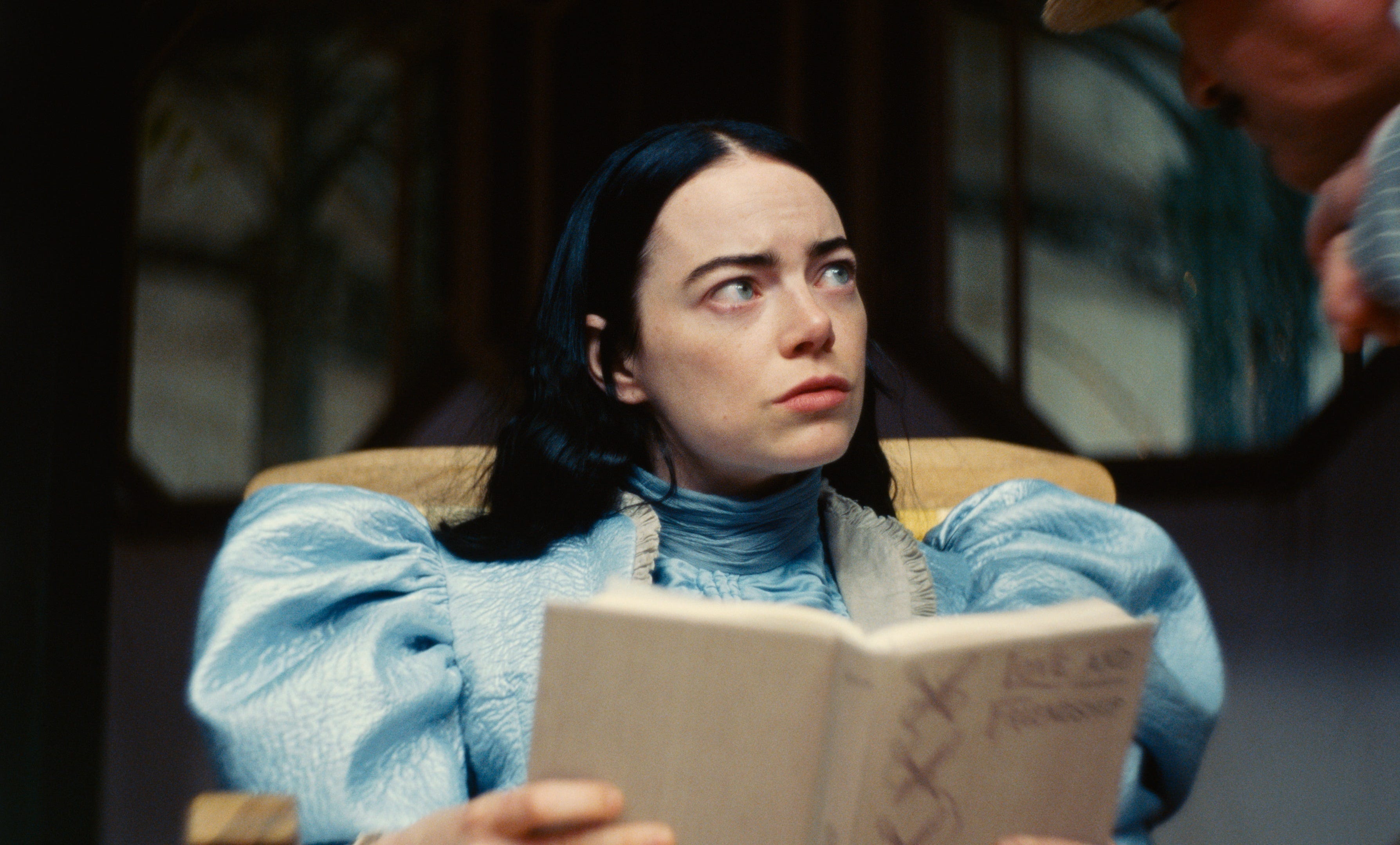
But luckily, we don’t have to dwell on disturbing fantasies such as these for too long. We can return to our safe assuredness in knowing that we are adults, who have all experienced a childhood, a childhood in which we likely experienced ongoing sentience, and so we all have this nice thing in common with one another.
It is indeed very nice to start off with some things we have in common with one another. For some reason, we often prefer to skip this step, and jump straight to our differences. I believe this is a mistake. It is too easy to forget how much we have in common with one another, as members of this same species we call “Homo sapiens.”
Of course, we also have many differences. For example, when we talk to other Homo sapiens, we may discover that some of our childhood experiences appear to have differed radically from one another. This would make sense — because yes, adult humans have many similarities, but also many differences. Child humans would probably have some similarities and differences as well, right? Probably child humans can have all types of childhoods. Maybe if child humans have different experiences of childhood, then this might account for some of the differences we can observe and learn about amongst adult humans.
It might not be true of all of our adult human differences, to be sure. To assume that would be an error, we recognize. But could it account for some of them? And if so, which ones?
There are those in psychology and psychoanalysis who have spent considerable time on this question. They have tried to answer this question, by examining the influence of what is sometimes called “nature” as compared to “nurture,” and even doing the added complicated business of seeing how these two things might influence one another.
However, we will not be doing this here. We are not focusing on debates, or on trying to resolve debates by answering potentially unanswerable questions. We are simply continuing to think about children and childhood.
So, let’s keep thinking, and see where we go from here!
To recap: despite all our observable and probable differences from one another, we can at least conclude that we all were once children. Additionally, if we all were once children, then despite any personal beliefs that we may hold about our individual childhoods having been unique and special, as well as any personal beliefs and hopes that our childhoods were unique and special to the people who cared for and (we may further hope) loved us, on the whole, childhood is not such a unique or “special” thing.
Very practically speaking, childhood is merely the stage in human development that we all must pass through to become adults. So, if all adults have had a childhood, then why all the fuss about it? Why all the attention to this broad category of human development, compared to the relative lack of attention we give to another broad category of human development called “adulthood”? What’s so special about this “childhood” thing that we all once had?
Maybe what makes it “special” is not so much that it’s rare to have, but rather, rare-to-impossible to hold onto, forever, once we have successfully achieved our position in “adulthood.” To put it another way: perhaps childhood feels special because it’s something we all experience in our pasts, yet it is something we are not able to experience ever again by being the actual child in the experience of childhood, once we become adults.
We can be a witness to another person’s childhood, we can participate it in as actively as we please — but it is their childhood, and not ours.
Although we all, at one time in the past, existed as our “selves” in childhood, once we are adults, we no longer currently in our childhoods. This means that we are no longer our childhood “selves.” Because, in our current experience of the present moment, we are adults. And the very crucial thing to understand about adults is that adults are not children.
Now, many adults may not feel like they have lost their childhoods, not completely. Many adults will argue that there are times, or perhaps “parts” of themselves, in which they very much feel like they are still children. Some adults are seriously objecting to my framing, at this point.
Because, after all — who am I to say this? Have I not, for example, heard of our “inner child,” who we must attend to with care, and not neglect or shun? Have I not heard that it is one aim of the spiritually-minded person to approach life with the “child’s mind,” a state that can be achieved in the adult? Am I suggesting some kind of radical dissociation process, or some kind of precise moment of violent severance from the supposed completely separate versions of ourselves that were “children,” and the supposed completely separate versions of ourselves that are “adults”? Am I not aware that this is a gradual process, actually, with much overlap? That maturity happens on possibly infinite timelines? That even as we mature physically, for example, mentally who’s to say that one must somehow align exactly as one might expect with one’s physical development?
Perhaps some adults never mentally progress beyond the capacities that are achieved by children, in their various earlier stages of development. In fact, this may be common. Maybe there are many people out there, looking ostensibly something like “adults” — and acting something like adults, and certainly taking on many adult responsibilities — but who should be more accurately classified as “children,” in terms of where they are at, mentally.
It is actually very cruel of me to suggest that adults are not children, as some sort of universal truth. It’s like I have never stopped to consider adults with developmental disabilities and differences. I have certainly never stopped to consider the feelings of all of us who are understandably deeply affected and impacted by all of the profound experiences that we had as children, some of which we can remember especially acutely, some of which we can recognize caused us lasting emotional distress and damage, and that we may decide to spend considerable time in psychotherapy or psychoanalysis processing and “working through,” and feeling all the many, many feelings that these experiences have brought up for us, and will continue to bring up perhaps for decades of our lives.
Further objections include: human development is highly subjective, and explanations of “normativity” are largely bullshit. What is, or is not, “an adult” or “a child” is subjective. And besides, we haven’t even necessarily all agreed on our terms, including an agreed-upon definition of “child,” which I should not assume is, somehow, a given.
Let’s consider some of these objections, as we continue to think about children and childhood.
It is true that the transition from “child” to “adult” (of which I am rudely still assuming have something of a common definition for most of us) happens gradually, and will emerge as a highly individualized process for each person.
Although each person experiences their own development in this individualized sense, nevertheless, there are those people who have attempted to provide us with some further clarification and refinement regarding the different “stages” that may be involved in the process of becoming an adult, or of what we sometimes call “growing up.” They have helped break all this down, in proposed “stages” that, yes, invites critique related to the overgeneralization of these supposed developmental models. However, these models aid us with a little scaffolding and clarity. They may be useful to know about.
One of these people who chose to help us out with all this was a psychoanalyst named Erik Erikson. Some of you may recall this man’s name, dimly, from some psychology class you took long ago. This would make sense, that you may have heard of him — unlike most psychoanalysts and their psychoanalytic ideas, Erikson and his ideas have been things that are regularly taught in psychology classes.
Anyway, Erikson helped us with this question of “how does a person go from being a child to becoming a full-blown adult?” He said that after we have passed through all what he called the “psychosocial stages” of childhood, we must attend to the psychosocial stage of “adolescence,” which he clarified as its own, unique psychosocial stage. Not everyone was saying this at the time, I hope you know! But Erikson was someone who said this. All of those who pointed out the unique psychosocial features of “adolescence” provided us with something useful to better understand something about how a person goes from being a child to an adult.

After “adolescence” (which Erikson further helpfully defined as occuring during the ages of 12-20), Erikson described the stages that he called “young adulthood,” “middle adulthood,” and “late adulthood.” He provided us with the age ranges for each of these stages (which you can look up on your own later, to better determine what is supposed to be your own adult stage, and perhaps panic about this upon your discovery that Erikson placed you in a stage you were not expecting or prepared for at all whatsoever [“what the hell, Erikson,” you may be thinking). Roughly, he also described the various developmental goals and tasks that he said we should hope to accomplish in each of these stages, and what bad things could happen if we fail to achieve these tasks/goals. All very helpful, really, even if this stuff does tend to stress psychology students out, a little!
Of course, it is good to remember that Erikson could generate and communicate all these ideas related to adolescent and adult development, because he already had the luxury of building his own ideas upon the pre-existing foundation that was described and elaborated on at length by another psychoanalyst, whose name is Sigmund Freud.
Sigmund Freud is another example of that rare psychoanalyst whose ideas are actually sometimes taught in psychology class. Unfortunately, these ideas are typically taught very, very badly. They are taught by people who take him to task for a lot of things — things that may feel (to those of us with more familiarity with Sigmund Freud and his theories) more or less “fair,” and things that feel pretty unfair and unfounded, really. This is because the people who are teaching their dutiful and perfunctory bit about Freud in psychology classes generally know practically nothing about Freud, or his theories. And what’s worse is that they simply don’t care. There’s no correcting them or convincing them otherwise. Trust me.
But anyway, yes, it is true that Freud has been taken to task for a lot of things. And one of the things he has been taken to task for specifically by those who are interested in this thing of “developmental psychology” is for seemingly not advancing his theories of development for humans beyond the age of 12. “Did Freud not really understand that people develop beyond the age of 12, and that this development continues to matter?” certain psychoanalysts and psychologists (and students of either) have asked, over the years.
People are often very angry at Freud for all that he did not do, all that he seemed to miss, and all that he seemed not to spend as much time on that we may wish that he had.
However, I can’t help but also add: fine, but look at all the man did do! I don’t know if you all know this, but the man published a lot of stuff!
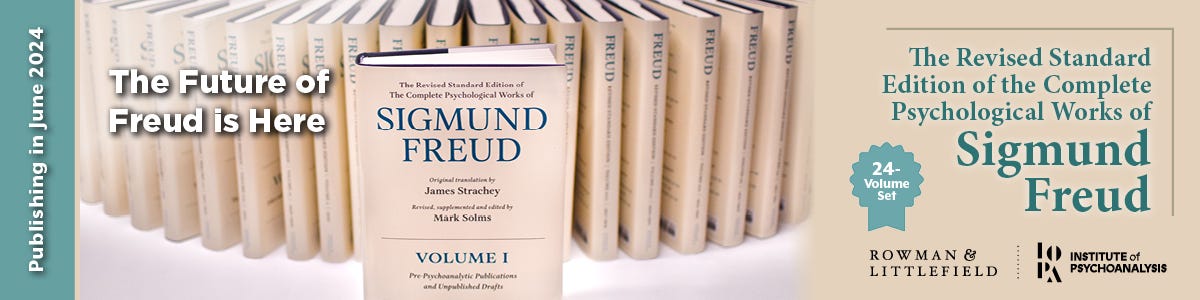
In fact, you can get physical copies of all the stuff he published, in very nice-looking printed volumes, and then you can put them all up on a bookshelf in your office or consulting room, and this is how you can know that you’ve “made it.” This impresses people very much, I am told, by those who have this entire set of printed volumes, especially the most recent version published in 2024 called The Revised Standard Edition, and available on Amazon dot com and other fine online booksellers in hardcover. I believe them, because I am, of course, very impressed by anyone who has the complete set of the works of Freud, and also very envious. By the way, my birthday is in April, for anyone who is interested, and Hanukkah happens even earlier than that. I’m just sharing this now because it’s good to share information about yourself and the dates that matter to you, to the community of very lovely people who are reading your Substack articles.
But, anyway, back on topic: even if the critics are correct, and Freud could have stood to give more of a shit about our development after the age of 12, please understand that he certainly clearly demonstrated how much he “gave a shit” about our development between the ages of 0 and 12. (And, if you, like Freud, “give a shit” about this time period in human development, you may also recognize that the idea of “giving” a “shit,” as a good thing and as a kind of present or whatever, fits as a description for considerations of childhood rather perfectly.)
Freud believed that our infancy and childhood is marked by what he called “psychosexual” stages or phases, and that these occur at specific ages. These are the stages/phases associated with the: oral (roughly, ages 0-1); anal (ages 1-3) ; phallic (also called the “Oedipal phase”) (ages 3-6); latency (ages 6-10); and genital (ages 12-death).
Now, listen: I don’t know if this next thing that I’m about to say is always appreciated, exactly, especially if you’ve been hanging around psychoanalytic psychotherapists a bit too much (always a concerning sign) — but most people don’t really like to think about sexuality and children. In fact, they often don’t like to think about this at all. They especially don’t like to think about all these weirdly named stages and how they relate to literal children and their development, or to think too much about any claims that children have their own, unique experience of “sexuality” that is very different than the “sexuality” of adults.
I mean, we can’t really blame them for feeling this way. But we should recognize that the reason they feel this way is because they are adults, and so they are thinking about “sexuality” in the way that adults think. They are not thinking about “sexuality” the way that children think, as the actual children in any of these childhood psychosexual stages. They can’t do this, fully or intuitively. They typically can’t think about it without considerable instruction and intellectual effort.
And why is this the case? Once again, it is because they no longer have access to how a child thinks and feels, or the logic and mentality of a child. They have passed through all the stages of development that the children they (and we) are thinking about are still in themselves. The evidence of this — how we know that they are not children — is through their misunderstanding of what is meant by “psychosexual” and all these “oral/anal/phallic” blah blah blah terms. The evidence that they are not children is through their automatic and instinctive reaction of discomfort, confusion, repulsion, and/or anger to the logic and rationale of children.
It is expected to have this reaction, if you are entirely unfamiliar with psychoanalytic thought — if this is, in fact, the very first time that you are approaching writing, terminology, and thinking like this in your life.
Now, I have been informed that there are those precocious adolescents who voluntarily seek out Freud (and probably a lot of philosophers and novelists who write what are generally regarded as “difficult novels”), or are in the kind of “college prep” environment that introduces Freud to them relatively early, compared to the rest of us losers. Good for them. Whatever.
I have also been informed that there are those of us who are perhaps the worst “type” of child of all: the children of psychoanalysts or psychoanalytic psychotherapists. These children, when they are literal bio-physiological children, may do shit like grab copies of Freud and/or other psychoanalytic texts off their parents’ bookshelves (that probably line every wall in their tasteful and intellectual home) to share with their friends at sleepovers, in the manner of saner children who used to share pornography magazines that may or may not exist anymore, given the death of printed media.
Obviously, this is all very strange and concerning, even to think of children growing up in homes with parents who are therapists or psychoanalysts. But the point is, apart from these weirdos, many people don’t encounter Freud until college, or way beyond that time.
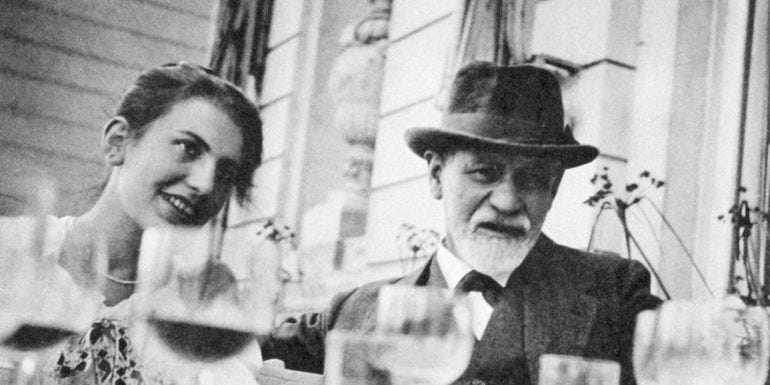
And actually, many undergraduate and graduate-level psychology students hear almost nothing about Freud or psychoanalysis at all, except very intense criticism from their professors. This criticism is accepted as the right stuff to think, not only because this is criticism that is expressed by their professors who may be assumed to have a certain level of expertise in all of this stuff, but also because — I mean, look! This is a guy who made up THEORIES about the supposed sexual interests of BABIES and TODDLERS?!
This is totally crazy, they very naturally think.
It is natural to think this way, the very first time one encounters Freud or writing reminiscent of Freud, on Freudian themes. The people who think Freud is totally crazy are supposed to think in these ways, and why? Because they are adults, and so they think like adults.
An adult experiences themselves, others, and the world around them, with their adult mind — a mind that has been shaped by the experiences they have had throughout their lives, including those very important experiences that occurred throughout their childhood — but nevertheless, through an adult mind.
Acquiring an adult mind is an achievement that occurs in stages. We now understand that typically, the mind continues to develop and change throughout adulthood. Before one gets to adulthood, first, a person goes through their childhood, and develops and advances rapidly during that time. Then, the child will reach puberty and pass through an initial transitional stage on its way to adulthood, a stage we call “adolescence.” After adolescence, at some point, the person will become what guys like Erikson called “a young adult,” and this, too, is an achievement. And then this now-young-adult will continue to develop from there, as long as they continue to stay alive, and stay on the “expected” trajectory for the developmentally “normative” person, or so we tend to hope.
The progression and maturation of our minds and bodies is not something that can be so easily stopped, nor should anyone attempt to do this. Aging is not something that should be halted or reversed, or seen as an “optional” process (that those, who could potentially afford to, might prefer to opt out of experiencing at any given time of their choosing). Aging is often feared, of course, but many of us wish it would be feared somewhat less than it is. It would be nice, too, if aging was not fought so hard against by so many of us, even for those of us who have reached the ages where our further “development” and “maturation” is now described in language that warns of “decline” and “degeneration.”
However, a challenge of aging is that at every age and stage of development, as we continue along the path of becoming who we will soon be, we are distancing ourselves from who we once were. We can’t go back there. They say time only moves forward, not backwards.
We will remember less, from these increasingly distant past times. We will remember certain highlights, but even these memories may differ significantly from the memories of others involved in those events, or not recalled by these people at all. Eventually, maybe all the people involved in our most distant memories will no longer be accessible to us, or alive. At this point, we may be left all alone with our incomplete and fading memories.
We are also, unfortunately, not able to recall and then experience with any dependable accuracy just exactly how we were feeling and thinking about any given situation from our pasts, all these “pasts” that grow ever-more distant in our minds. We can’t experience these events as they were happening for us in our minds then — not fully, anyway. And this is especially true for our pasts as children, even more especially very young children, during which time we had simply not developed many of the styles of thinking and feeling that we now have, as adults.
We have lost much of our memories of the past, and our older versions of thinking and feeling. There are both psychobiological and psychoanalytic explanations as to why — why, for example, we don’t remember anything before the age of three or usually a little older than that (either during or after the ages associated with the “phallic” or “Oedipal” stage) — but regardless of whatever explanation of memory and/or cognitive development that we prefer: if we can’t recognize that we have lost this, then we can’t even begin to try to understand children, or attempt to “think about children and childhood” outside of our now-adult selves as our forever-cemented reverence.
If we can’t understand that we are adults, and that as adults, we think and feel very differently than children — no matter how young or “playful” we may feel, or how much our own childhood lives large in our minds, or how uninterested we may be in having children ourselves — if we have refused to engage in any necessary mourning and acceptance over the fact of our childhoods being gone forever, of not being able to add to those childhood experiences as a child in our childhood, and of now having to live in this world seen by others and ourselves as “the adults,” and “the grown-ups,” who are generally assumed to have advanced beyond the capacities of children, and are thus given more freedom but simultaneously entrusted with more responsibility, including the responsibility of showing consideration for children that are in our “families” or not — then we can’t understand children OR adults, childhood OR adulthood, or think about any of these human experiences.
We can’t appreciate the differences, or the similarities. We can’t celebrate what is truly remarkable and impressive about being an adult, or what is truly remarkable and impressive about being a child. We may accidentally project a kind of child thinking and logic on adults, or adult thinking and logic onto children.
Throughout this article, I have asked you to think about children, while perhaps also not saying all that much about children. (Welcome to one of Mel’s Ongoing Lacanian Bits, I must confess.)
However: if you are truly an adult, then with this, you can do whatever it is that you want — adults are not under my control. Adults are free to say themselves or others, “I am uninterested in children, and prefer not to think about them very much. In fact, I don’t like them very much, and I wish to have as little to do with them as possible.”
Now admittedly, I’m not a personal fan of those sentiments, but look, maybe that’s OK, if people feel that way. Unfortunately, one can get the sense that the issue here is that, with some of these adults, they are resentful of these actual children having replaced themselves as the “children” in the collective cultural understanding and/or court of public opinion. In other words, perhaps unconsciously, these are adults that would prefer (on some level) to remain as children, and be thought of and treated (on some level) just like children. They wish to be given the privileges of childhood.
Not merely “infantilized” — I’m not saying that. This stuff is not that simple. We’re not necessarily talking about adults who like cartoons and stuffed animals and Disney movies, or adults who take pleasure in anything related to the nostalgia and/or romanticization of childhood, even the less critically acclaimed commercialized forms of nostalgia and romanticization.
Instead, we’re talking about those adults who unconsciously demand that they be considered as children in terms of their relative place in the minds of all other people they encounter. They demand to be “centered,” perhaps we could say, in other people’s minds and in society. They demand affirmation and validation and attention. They wish to be recognized, encouraged, and supported, and to be granted the freedom to attend to all of their own personal needs and wants and desires and dreams as the most important things.
Most of all, they very much want not to be burdened with the tasks of having to care for others, especially any unpaid, relentless tasks, or to conform to some kind of general principle and expectation placed upon them, that they should provide care.
We can witness plenty of examples of this in our daily lives. Sometimes, it can feel as if we are witnessing perhaps far more of these everyday examples than there once were. Examples that provoke us to say privately to ourselves: “not only did he refuse to let the woman and her very young child have his seat, he seemed extremely indignant and shocked that there would be such an expectation placed upon him — does he think that he is a child, that he should be catered to by all others? Does he think his needs matter the most, always? Does he feel that it is only natural, right, and good for him to feel that way? That it’s a dog-eat-dog world out there, survival of the fittest, and tough shit, it’s not his fault or his business if someone else in his direct vicinity needs any help? That it’s not his job to ‘baby’ anyone for their poor life decisions, such as having children and then bringing them on the train, or perhaps bring children out in public at all? Has it occurred to him that he is an adult now, and has joined Team Adult, and thus has adult-level expectations of social responsibility, consideration, and care? That, even if he never has a child himself, it’s not all about him anymore, now that he has successfully earned his ‘adult human’ diploma, upon which it is written, ‘I Am A Very Big Kid Now’? If so, this is a problem!”
It may be tempting to unravel in our own indignation and annoyance and want to lose our minds at incidents like these, and all that we might project onto them, but it’s also important for us to get a grip. It’s especially important that we do so before we become like all the podcast guys who had one (1) bad subway experience and now are experts in the Decline of the Culture and State of the World.
But look: we must admit that we all prefer to avoid responsibility and caretaking expectations, at times. Right? Can we admit this? Because after all, wouldn’t it be nice not to have so many of the responsibilities of adulthood, and instead, just the privileges? This of the adults who will say, “I can hardly take care of myself. How could I possibly care for a child?” Who doesn’t feel that way at least a little bit at times, whether they admit to it or not — a feeling that definitely includes those of us who are already parents?
Unfortunately, the fact remains that as adults, who have earned the rank and title of “adult,” it is expected not only that we could — if called upon — perform the duties associated with adulthood, which includes “taking care of children,” it is also assumed that we know that we = adults, and children = children, and thus, it is the business of the adult to work to develop an understanding of the child and of how we could better assist in some hypothetical emergency in which we may have to care for AND interact with children.
It is assumed that we recognize the personal and societal advantages of being an adult. It is assumed that we know that the average child simply does not think of things in the way that we do, and that we should not force our own thinking on a child, or assume that the child should be thinking about anything outside of the logic of the thinking of the child.
We are meant to recognize our position, accept our responsibilities, and get to work. And what is this work? This is called the work of “thinking about children.”
And although we may be able to better understand and accept the fact that we are the adults now, with our imagined psychoanalytic teachers and parental figures available to support and guide us, we may once again attempt to commit to the injunction to “think about children,” but still with these supports, which are nice to have.
Even though we are adults, perhaps our parental guides will help keep us to the task of trying to think about children, and not to believe that we are naturally capable of thinking “like” or “as” children, and to enable us to accept the impossibility of literally being able to think “like” or “as” children with ease and fluency, ever again.
Perhaps they will perform this teacher and guidance function for us, until we don’t entirely need this somewhat absurd “Papa Freud” or “Papa Erikson” or “Mama Klein” or “Papa Lacan” fantasy framing anymore, and can actually do some thinking on our own.
We are hopeful that all this thinking will help us grow in our overall respect for children, to tolerate this idea of them, and the logic of their minds. We can further grow to remain curious about, and appreciate and genuinely enjoy children, whether or not we ever choose to have any of our own, or to work with children, professionally.
And, in doing so, we attempt to contribute to all of our own ongoing human development, individually and collectively. We continue to attempt to reach the stage, whenever that happens, where we can accept and recognize more about who and what we are in relation to the others in our midst, and who and what we are not.
And in the end — after all this — surprisingly, we may seem relatively OK with the whole thing of being an adult, and appear rather confused or shocked to learn that not knowing “who or what children are” is a sincere struggle for anyone!

Mel! Complex and verbose as ever, here she is!! Fascinating article, thank you for writing this. I recently attended a psychoanalytic talk where one analyst was interviewing another famous psychoanalyst. The topic of childhood came up, then they started talking about their experiences with their own children, saying, "The more I think I know my child, they do something that makes me believe I don't know them at all."
The paradox in my observation is this: Why do we desire to skip the business of childhood and at the same time are so envious of children? Children are not mini adults, but sometimes are treated or expected to act like adults. Very upsetting and unhelpful. Perhaps, it is because children evoke such strong emotions in us. Children are real and can access the unconscious much more easily and quickly than we can as adults. Children are also highly sensitive to the struggles of their parents; they just know because of the whole psyche close to thing (you know?). Anyway, we all have both a psyche (mind in motion) and a childhood. I'll end with that. Trick or treat, always treat. And this sub was a treat (as always when it comes to your work)!
Test